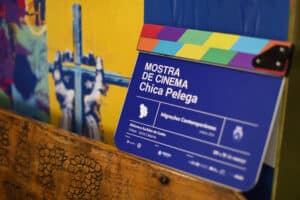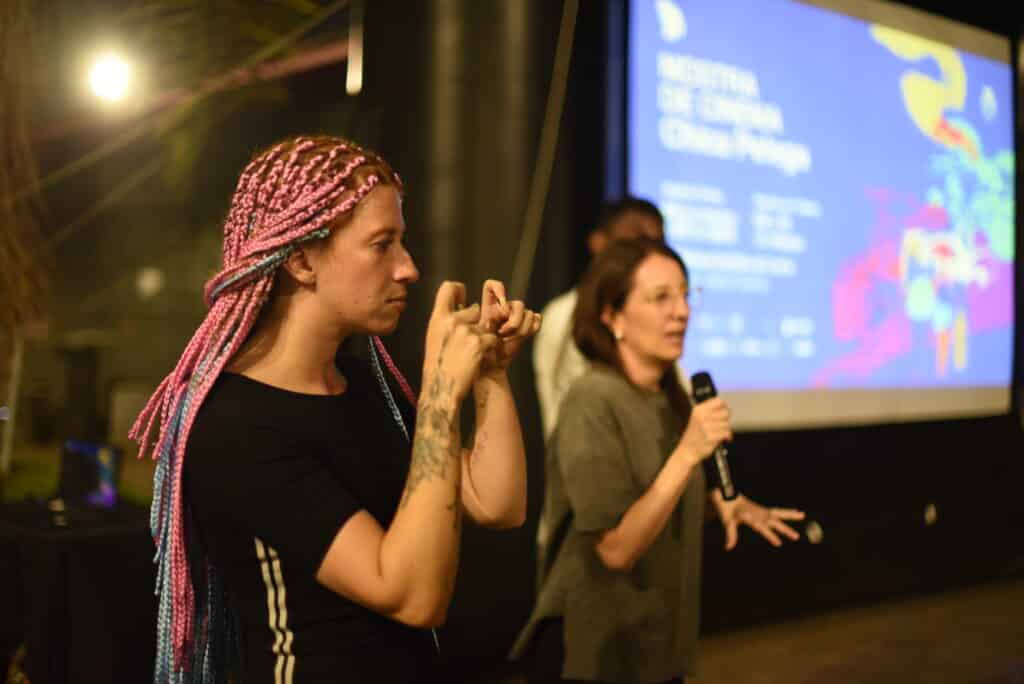

Sensitivity is what drives the curatorship of the 4th Chica Pelega Festival. Screening accessible films is not just another box to tick in a funding call; it is a commitment the Festival keeps with its audience. The requirement came to be demanded because, finally, it was understood that access to knowledge and art cannot be limited — including for children who are born, grow and develop without the ability to speak, see, hear or move. This should not be an impediment to knowledge and learning.
The Chica Festival screens accessible productions, including the Libras (Brazilian Sign Language) window, a communicational accessibility feature that shows an interpreter in the corner of the screen; descriptive subtitles for the deaf and hard of hearing (LSE), which turn sounds into text; and audio description (AD), a feature that translates images into words, allowing blind or low-vision people to understand the artistic work. In this way, those who will now have the possibility of viewing them on the Pupilo Play platform will have access to accessible productions, with distinct themes.
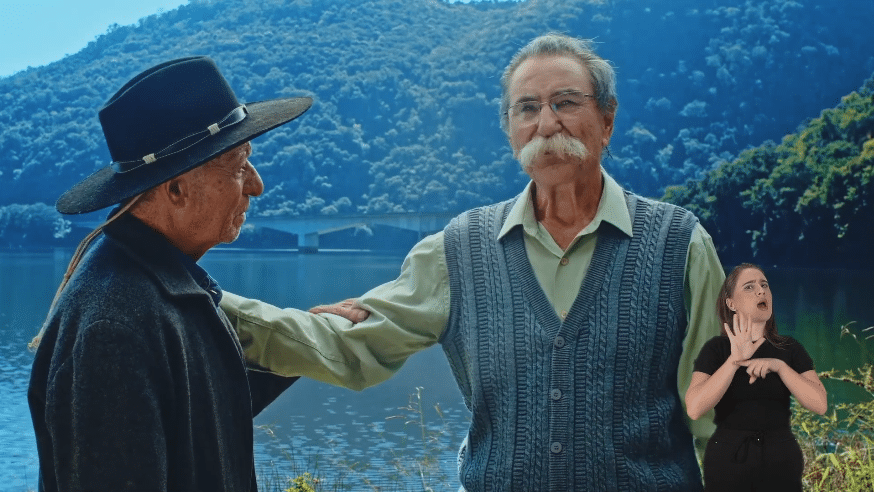
Here are some examples of films screened and their various accessibility features:
Acordo com Lampião? Só na boca do fuzil! The documentary tells the story of the Nazarenos, residents of the district of Nazaré do Pico, in Floresta (PE), who confronted Lampião, the Prestes Column and the Pernambuco police in the early 20th century. They were the only fighters that Virgulino Ferreira da Silva, Lampião (1897-1938), feared — so much so that he tried several times to make peace with them, only to receive the film’s title phrase in reply. (LSE)
A Jornada de Piatã – Brazil, 16th century. During European colonization, Piatã, a Guarani warrior, is captured by the Xokleng and forced to fight against the Spanish. On this journey of struggle and resistance, he finds an unlikely ally: a European horse. Together, they face dangers and defy the destiny imposed on them. An epic about friendship, memory and the true heroes of this land. (Libras, LSE)
A Lua dos Beijos Silentes – Upon turning 18, Nino must, according to the traditional rites of the Lagoa da Consagração community, find a girl to form a couple and thus secure the right to immortality on the Moon. Alone, rowing aboard a canoe in the darkness, he sets off in search of his suitor. It is a beautiful night, but something seems out of place. The Moon has other plans for Nino. (Libras, LSE, AD)
A Menina Hip Hop – Tired of losing at football to Ana Paula, the boys decide to teach the São José crew a new game: the rhyme battle. The girl, frustrated at losing to the sharp Manga MC, studies the references of women in rap until she becomes clever with rhymes and turns into the hip hop girl. (Libras, LSE)
Baú – Lucas is a boy full of courage and imagination who sets off on a fantastic mission to the mysterious Sphinx Island. There, he tries to unravel the secret of a magic chest left by the legendary Captain Deise. With the help of the fabulous Florid Beard Pirate, he lives a journey full of adventures and mysteries that leads him to the treasure and to deep discoveries about himself. (AD)
Beira: além das margens do Rio Uruguai – A river movie that travels the Uruguay River from end to end, crossing the borders of Brazil, Argentina and Uruguay, observing the river from the point of view of a former raftsman. Along the way he meets people who, like him, are the very memory of the river. (Libras, LSE, AD)
Memória de uma rezadeira – In a lively classroom, children share their memories of Tia Dorinha, the most important prayer healer of Jacarezinho, and discover what the new and old generations have in common. (Libras)
Mundinho – A father gives his daughter the most special gift of all: a little world just for her! As he explains to the girl how to care for her companion, the child’s imagination takes flight and invents all the adventures they will live together. (AD)
Notáveis do Samba – In the city of Joinville, nationally known as the “City of Dance” and marked by a strong European heritage, a heart also beats to the rhythm of the tamborim, the cavaquinho and the surdo. The documentary dives into the local samba scene, revealing characters who keep the flame of Brazilian popular culture alive in the country’s south. (Libras)
O Fio de Ariadne – An ancestral force crosses times and spaces to guide two women in their processes of becoming who they are. They share a restlessness: the desire to escape the limitations imposed by a world that dictates the contours of what is possible. The thread connecting the two stories is a book — the key to opening the doors of a labyrinth of multiple centers and possibilities. (Libras, AD)
O Silêncio dos Lobos – After another exhausting day of work, Dante, a Black civil police officer, decides to stop by a supermarket at his wife’s request. What seemed like a simple end to his shift becomes chaos when he is mistaken for a robber inside the store. An incident that cruelly exposes the reality of today’s society, revealing human irrationality through the savagery of its acts. (LSE, AD)
O Sonho de Maria – The short film “O Sonho de Maria” tells the story of a lonely woman tormented by a disappointment in her youth. Now over 60, she devotes herself to sewing, more as a way to escape than to live — until her bitterness overflows and the past returns to settle scores. (Libras)
Outro Lugar – Júlia found a giant egg in a magical place inside her school and believes that when it hatches she will become a queen of dragons, but the adults want to stop her from realizing this dream. (Libras, LSE, AD)
Panela Histórica: Memória Gastronômica da Cidade de Marabá – A medium-length film that explores the rich gastronomic tradition of Marabá, in southeastern Pará, highlighting the influence of indigenous, Lebanese, Northeastern and Goiano peoples. The film recovers recipes and memories from 12 residents, celebrating local cuisine and the cultural connection that spans generations. The work honors the flavors and stories that shape the city’s identity. (Libras)
Passa a Bola – Mira and Renata are sisters constantly at war, and moving to a new house only increases the fights. Passionate about football, Mira wants to play with the boys on the new street, but faces resistance simply for being a girl. With her sister’s unexpected help and her own talent, she is determined to prove that football has no gender and that what really matters is the game. (Libras, LSE)
Queimando por Dentro – Born into a neo-Pentecostal evangelical family, Samuel grew up at the heart of a religion that has gained great influence in Brazil in recent decades. As he begins to explore his sexuality and embrace his queer identity, his world is shaken when his father abruptly forbids him to dance at church. A turning point in his life is imminent. (Libras, LSE, AD)
Saber Brincar – Saber Brincar is a film about the charm of being a child in the heart of the Cariri region. The documentary dives into the colors, rites and traditions of children who, through their games, keep alive the roots that flourish in popular culture groups, celebrating childhood, play and the tradition that shapes the future. (Libras)
Terra Mãe Mãe Terra – Interweaving daily life in the occupation with the struggle for rights, the documentary follows the Warao indigenous people and portrays their experiences in a land reclamation in Betim-MG. (LSE)
Tico-Tico no Fubá – A monkey gets annoyed by a sparrow that keeps pecking at his crop, in a lighthearted tribute to the classic by Zequinha de Abreu. (LSE)
Uma Erói – Mother and daughter seek some motivation to get through an intense phase of mourning. Lis doesn’t quite understand the feeling of losing her brother, but she senses that a spark is missing from her life, until she comes across something new that will change the course of her days: a Kung Fu school! (Libras, AD)
See more details about the films on the Chica Pelega Film Festival website.