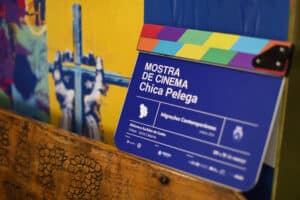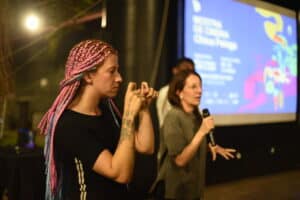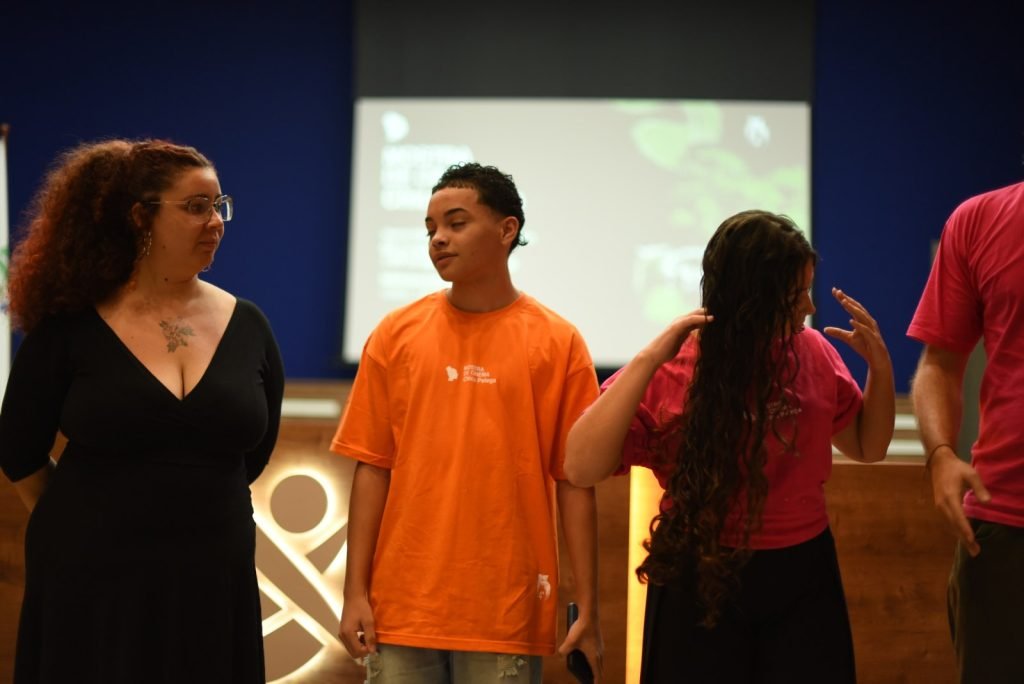
In its largest edition, the 4th Chica Pelega Film Festival – Contemporary Migrations screened 117 films from 22 countries and 13 Brazilian states, selected from 2,393 films submitted from various countries, turning Videira-SC into a great space of encounter and learning about cinema and the different cultures of the world represented on screen.
There were 10 days of in-person screenings in Videira and 30 days of online programming. In Videira, the festival occupied several spaces: the cinema room of the Euclides da Cunha Library, the Eurico Rauen School, the Vitória Events Center (CEVI), the Antônio Francisco Gaio Square and also the UNOESC auditorium, reaching 1,479 viewers.
In all, there were 34 in-person sessions and three online, divided into six categories: Migrations Shorts; Migrations Features; Student; Childhoods on Screen; Catarinense and Contestado. Videira welcomed an audience made up of schools, associations and social assistance departments from the municipality itself and from the neighboring cities of Rio das Antas, Monte Carlo and Tangará.
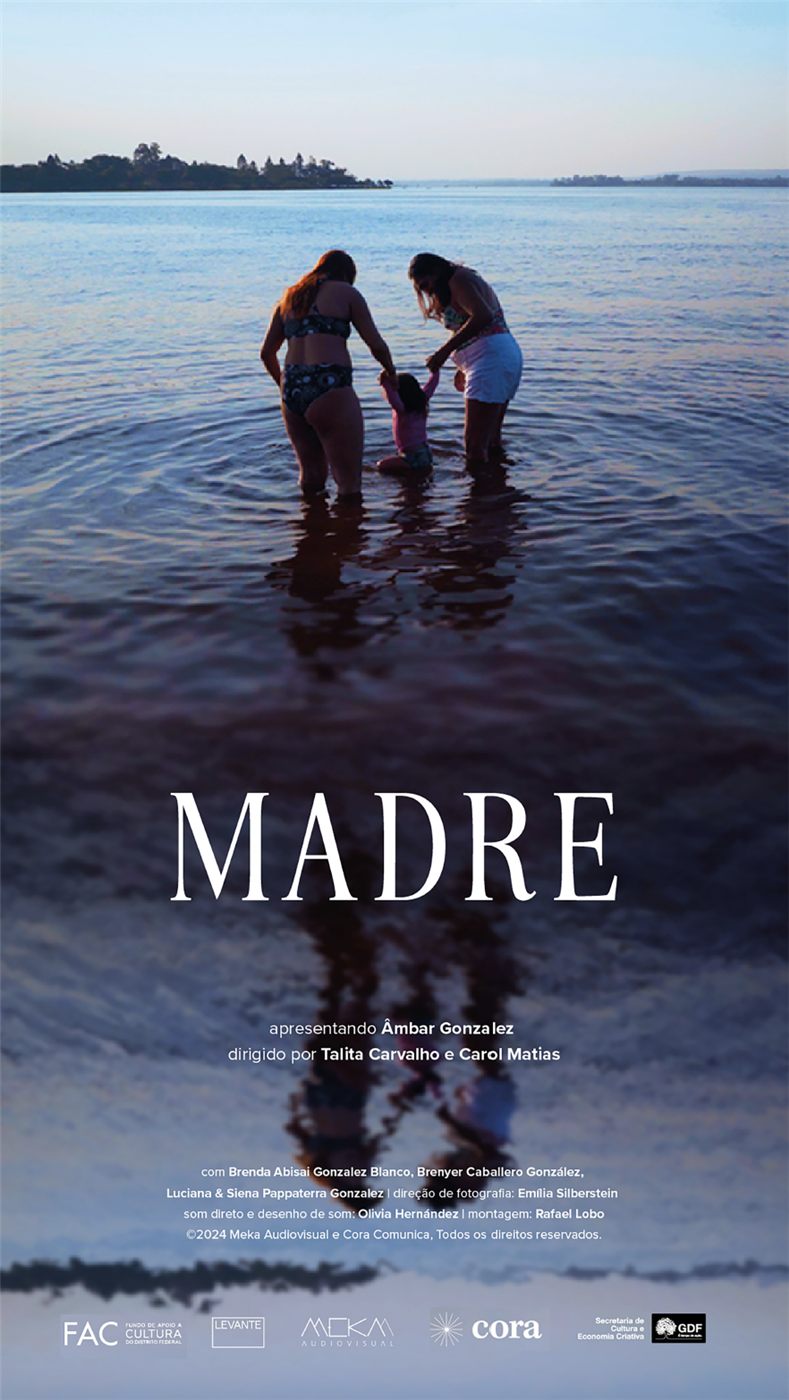
The films were evaluated by a technical jury and also by the audience of children and teenagers. By the technical jury, the Contemporary Migrations category, which highlighted challenges of adaptation and cultural transformation through migration, awarded, among 25 competing films, the Brasília short Madre, by Talita Carvalho and Carol Matias, and the feature O Rancho da Goiabada, ou Pois é Meu Camarada, Fácil, Fácil Não é a Vida, by Guilherme Martins, from Piracicaba/SP. An Honorable Mention was granted to Um habitante e sua cidade, from Peru, directed by Mauricio Franco Tosso.
The jurors of the shorts category were Virna Paz, journalist and producer of films and series, and Cíntia Domit Bittar, filmmaker and producer from Santa Catarina. The features were chosen by Venezuelan Sophia Luy, coordinator of the Caracas Doc Documentary Film Festival, and Ygor Gama, audiovisual filmmaker and creator of the production company Cinema do Futuro.
In the Contestado Showcase, which brought stories about the culture and struggles of the Contestado region, the winning feature was Beira: além das margens do Rio Uruguai, by Daniela Farina and João Fernando Lucas, from Chapecó; Pedaço de Chão, by Elias de Lima, from Caçador, received an Honorable Mention. The jury was made up of Marcia Paraiso, documentarian, screenwriter and director, and Victor Figol, PhD in History and researcher.
In the Student category, which covers films made by children and teenagers about their family and school daily life, their reflections and possible futures, the winner among 17 competitors was the Belo Horizonte short Deixa o PPG Voar, by Paula Valentine. A Menina Hip Hop, by Miguel Eduardo, from Rio de Janeiro, received an Honorable Mention. Priscila Pacheco, cultural manager, journalist and cinema specialist, and Arthur Peixer, who develops the Curtas Contestados project with students, were the jurors of the category.
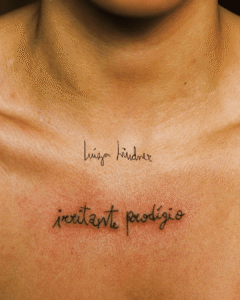
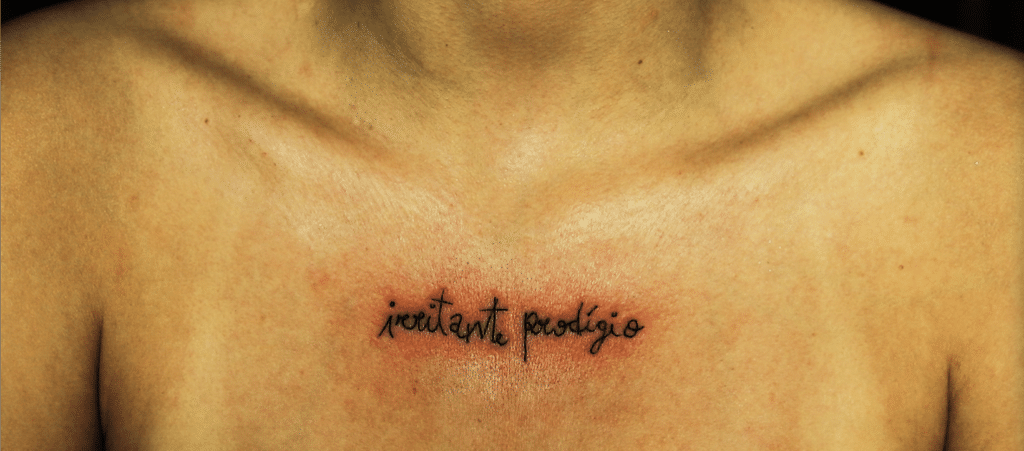
The Catarinense Showcase chose the short A Lua dos Beijos Silentes, by Mika Queiroz, a Florianópolis production, and the feature Irritante Prodígio, by Luiza Lindner, from Blumenau, among 14 competitors. The Honorable Mention went to the short Maracatu Liberta, by Rita de Cácia Oenning da Silva, from Florianópolis. Edileuza Penha, teacher, audiovisual filmmaker and researcher, and Gabriel Borges, curator, editor and director, member of Olhar de Cinema – Curitiba International Festival, were the jurors.
The Childhoods on Screen category awarded the Rio Grande do Sul animated short Menina de Asas, by Luciana Druzina, and granted Honorable Mention to Restrito, by Tamer Zakaria Shawamra, from Palestine, and Manity, by Hussen Ibraheem, from Lebanon. The jury was made up of Daniel Aragão, director, screenwriter and audiovisual producer, and Luiza Lins, audiovisual filmmaker and creator of the Florianópolis Children’s Film Festival.
The children’s and teenage audience formed the Young Critics jury in the various in-person sessions of the Childhoods on Screen Showcase. Jurors aged 3 to 5 chose as best film Medo Monstro, by Andrew Gledson and Eduardo Padrão. Between ages 6 and 10, the chosen film was Uma Erói, by Babi Baracho and Camila Guerra. Ludmilla, by Vini Moreira, was the awarded film in the 11-to-14 age group. And the teenagers aged 15 to 17 chose the film Maputo, by Lucas Birolli Abrahão.
The livestream is available at:
Follow the Festival on Instagram @mostra.chicapelega and on the website.