

A few words about our visual identity as an invitation to take a detailed look at the quilombola culture of the meio-oeste of Santa Catarina
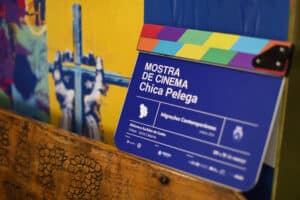
When we thought about the visual identity of this edition of the festival, we considered the richness and importance of the visuality that makes up the culture and the shaping of the history of the quilombos of the Contestado region. We started from the collage created by artist Kika Chmura for the second edition, added icons that represent the quilombola communities, and adapted the images with a more graphic look. Under the consultancy of the Quilombola Curatorial Committee, of Vanda Pinedo, of teacher Luana Fadani and of the research by one of our producers, Pâmela Enmerich, we began this dialogue and the process of the changes needed for the new identity. The designer Magalhãez was the one who gathered all the ideas and translated them into the final identity that you can see in our graphic pieces, social media and website.
In the images below, you will find some meanings of the elements that are present in this year’s visual identity.
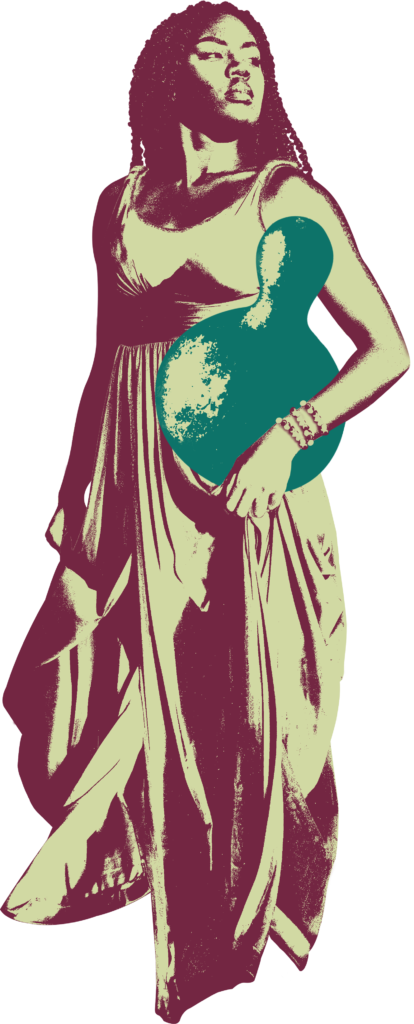
The woman who carries the festival’s name is Chica Pelega; in this edition she represents the quilombola population. Chica’s existence is, historically, later than the formation of the quilombos, and what brings these two events together is the struggle for land, peace and freedom. The young leader, named Francisca Roberta, defended her people and her land in one of the greatest territorial disputes in the country, the Contestado conflict, and remains in history as a legend, of whom there is no record of what she looked like, which allows us to imagine her in different ways based on her personality full of strength, determination and courage.
In this representation, she holds a gourd or porongo, an item with various uses for the quilombola population. The gourd is a fruit that carries within it everyday utilities, in religious ceremonies, in art, in music, and it can always surprise us with its multiple uses and meanings. They are part of a broad universe of cultural practices and traditions of the quilombola and also Indigenous population, with its origin traced back to Africa¹.
We can mention some of the uses as a container for liquids, bowls, small bowls, in the making of musical instruments such as atabaques, maracas, rattles, xequerês, berimbaus, among many others. In the Contestado region, as in the entire south of our country, the gourd is passed from hand to hand in the form of a cuia that carries the chimarrão, a drink made from yerba mate, an Indigenous heritage so popular and consumed by all that many people have no idea of its origin or of the habit of its use.
If nature, as the anthropologist Claude Lévi-Strauss suggested, constitutes an undeniable source of material resources, as well as an object of thought that lends itself to the richest possibilities, then the gourd, in its various forms of occurrence in Brazilian territory, is, without a doubt, a fruit good to use, but also to think with.²
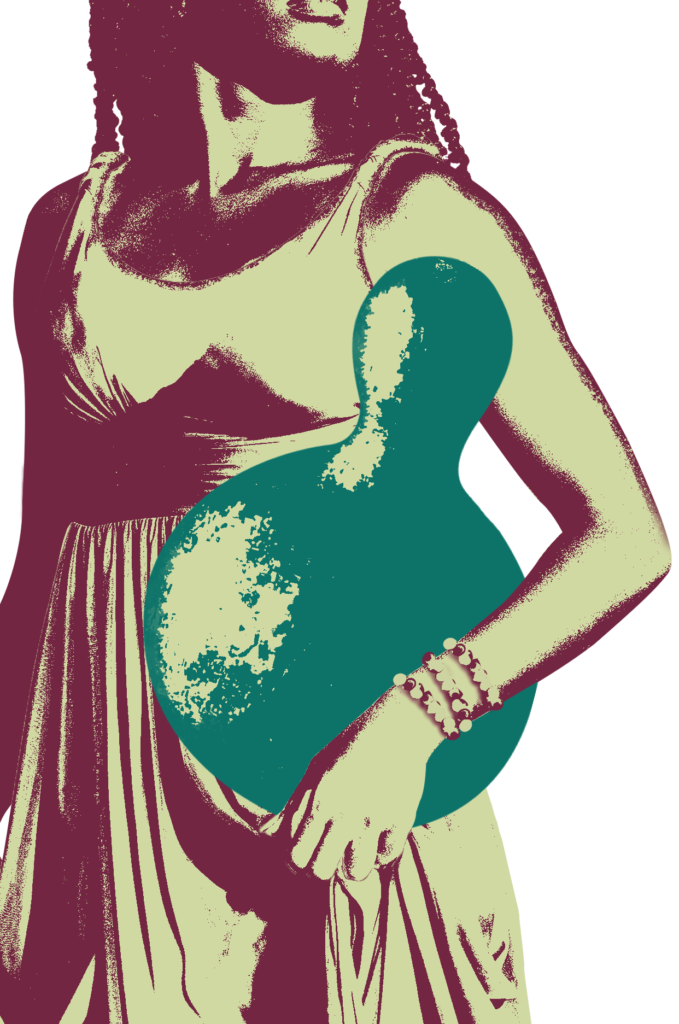

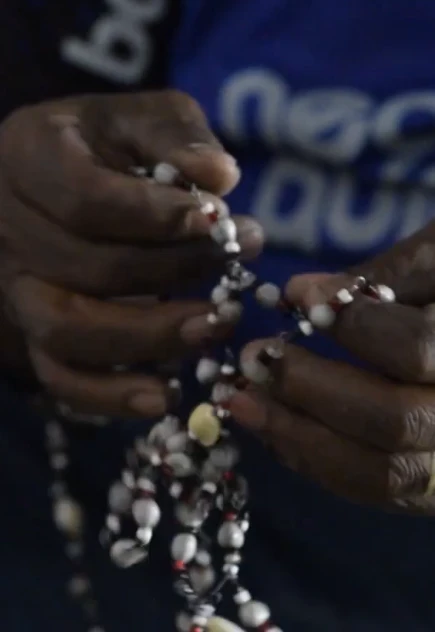
A bracelet of Job’s tears adorns the woman’s wrist, a plant that also carries other names: capim-de-contas, contas-de-rosário, lágrima-de-jó, capim-rosário, capim-missanga, capiá, biurá, biuri… Very popular among quilombolas, Indigenous people and the rural population, it is used in various ways. In native and ancestral medicine it is used from the stem to its fruits, which can also be food, in the form of a nutritious flour for making breads, biscuits and other dishes such as soups and porridges. The best-known form of the fruits/seeds is in the making of rosaries, adornments such as bracelets, wristbands, necklaces, art objects and musical instruments.
The land that fills the image from end to end is the reason for everything. It is for it that the struggle was made and still happens; it is a path to the emancipation of people and to social transformation. Quilombolas, Indigenous people, immigrants and remnants of the Contestado conflict share, in their due proportions, the struggle for recognition of the territory they have long inhabited.
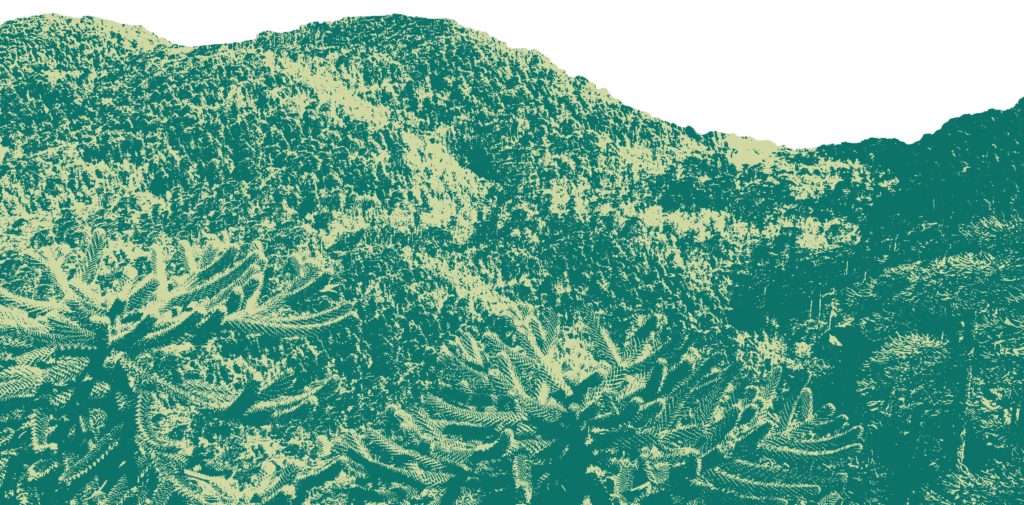
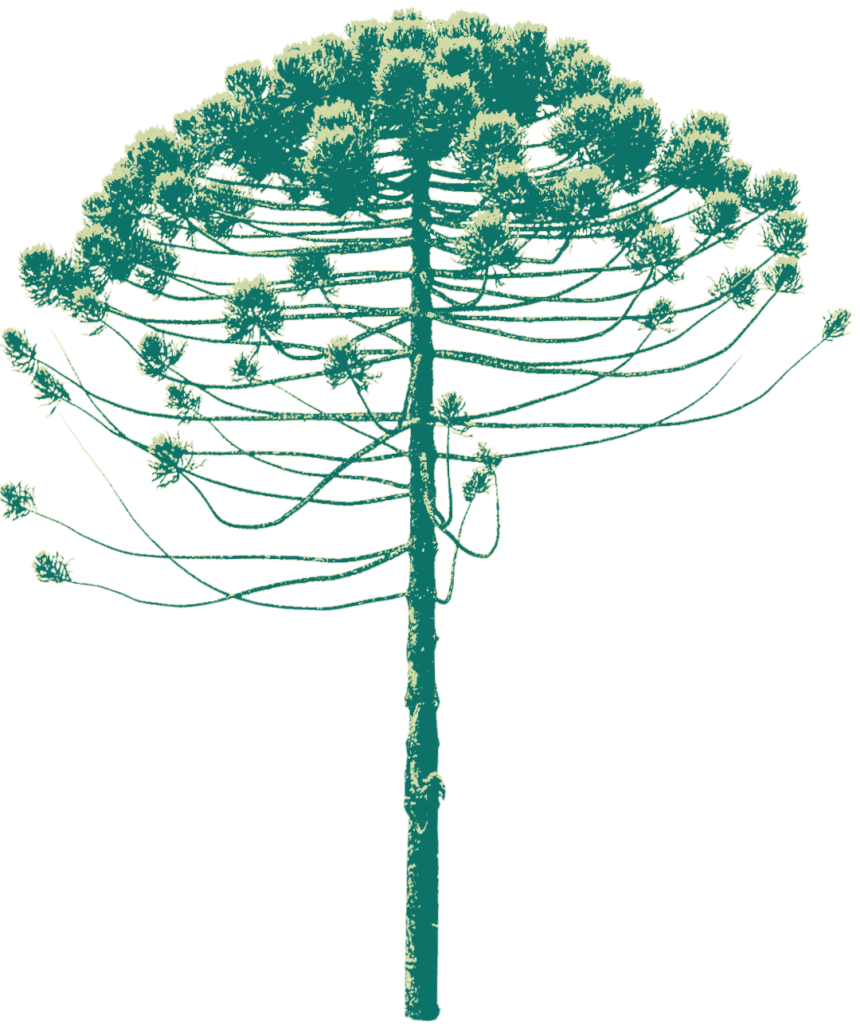
Sturdy araucarias rise imposing and unmistakable over the mountains. About 200 million years old, it can grow more than 50 meters tall and its bark can reach up to 18 centimeters thick. In Brazil, it is found mostly in the south region, being over the years an essential source of culture and food for original peoples and quilombolas. Its leaves and bark are used in rituals and natural medicine practices, while its edible seeds, the pine nuts (pinhões), are nutritious food for people and animals. It is worth noting that this legendary tree currently occupies 3% of its original area and is at risk of extinction as a result of human ignorance by 2070³. Known as the tree from the time of the dinosaurs or fossil tree, the araucaria undoubtedly symbolizes the quilombola culture of the Contestado region for its resilience, strength and relevance.
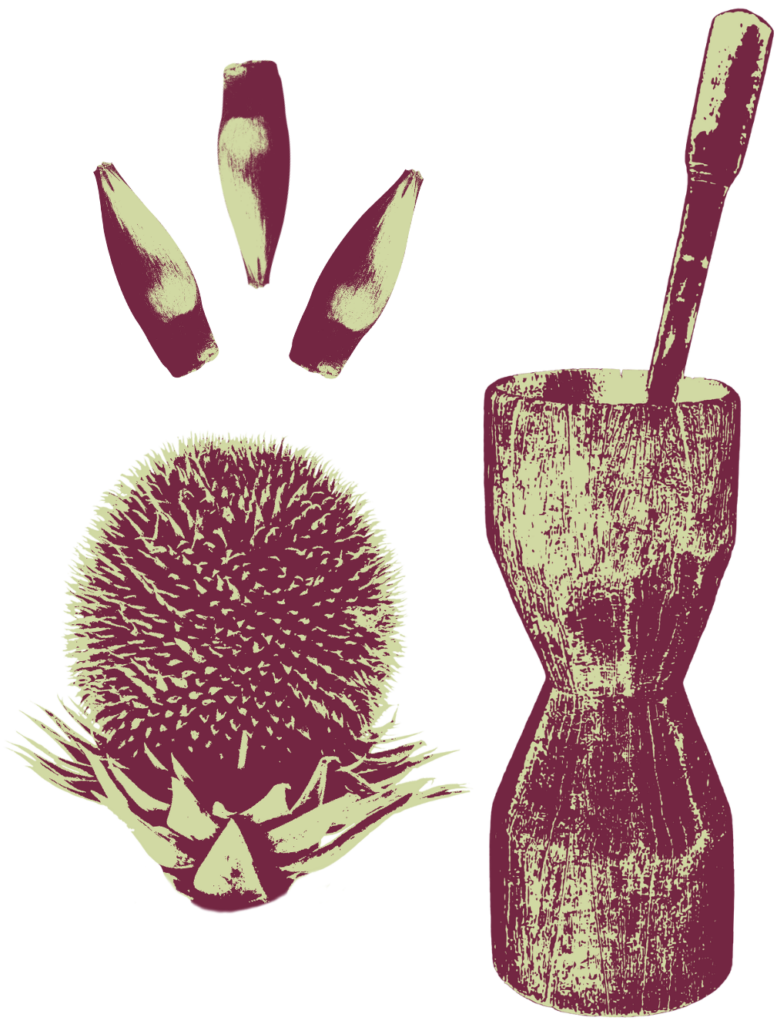
Other elements were used as support in composing pieces for the festival. The first is the pine cone. The araucaria has no fruit; it produces the pine cone, which can weigh a little more than three kilos, holding within it up to 100 pine nut seeds, an essential food in the ancestral quilombola and Indigenous cuisine of the meio-oeste of Santa Catarina. Some of the pine nut preparations are: in soups, grilled on the griddle, as entrevero (where it is mixed with meats and cooked on a plow disc), boiled in water, or in the famous pine nut paçoca, formerly pounded in the pilão (mortar). The pilões of this region, prevalent in old and current quilombola communities and also among the original peoples, are generally made from tree trunks, used for the purpose of grinding, mixing and shelling foods, and remind us of subsistence and the rich, ancestral food practice.

The basket is made of taquara bamboo, a native species exclusive to South America; it is woven by hand and has the most varied possible uses. Taquara bamboo is also used in other crafts as raw material for making work tools and even as a structure in the construction of houses by quilombola communities and Indigenous peoples.
Finally, the aim of the visual identity is to disseminate and value quilombola culture so that the meio-oeste region of Santa Catarina understands that the quilombola struggle for land and for existence belongs to all people. Tell us what you thought of the visual identity of the 3rd Chica Pelega Film Festival – quilombola edition!