

The second edition of the event, sibling of the Chica Pelega Film Festival, debuts next Wednesday, April 26, 2023, in Tangará and continues on the road until April 30, in São Miguel do Oeste.
After the success of the first edition, the Chica Pelega Cabocla Journey emerged to keep alive the legacy of Francisca Roberta (Chica Pelega, heroine of Taquarussu do Bonsucesso) and Caboclo Resistance in facing the army of arrogance.
The visual identity of the CHICA PELEGA CABOCLA JOURNEY of this edition was produced by teacher and artist Gerson Witte: “The green cross as the flag of the Contestado and one of the official symbols of Santa Catarina. The warrior woman with the machete to defend her people. I hope the brand I developed brings success to the Journey,” explains the teacher/artist Gerson Witte. The Contestado flag is recognized as a regional symbol of the state of Santa Catarina, guaranteed by Law No. 17,308 of November 6, 2017, and indicates in a sole paragraph: The Contestado Flag must be white and have a green cross arranged in a centered manner.

In 2023, on Monday, April 24, at 8 p.m., on Facebook and YouTube, the launch of the 2nd CHICA PELEGA CABOCLA JOURNEY took place; the opening is on April 26, at 7:45 a.m. in Tangará, at the Rio Bonitense Club, and at the Auditorium of E.E.B Padre Nóbrega in Luzerna at 2:30 p.m. See the full livestream below. This year, the Chica Pelega Cabocla Journey presents the touring of the theatrical show: NATUREZA CABOCLA (Caboclo Nature), a production by Nuvem Cabocla Produções and Lumiar Criações Artísticas.
Launch livestream of the 2nd Chica Pelega Cabocla Journey
Professor Paulo Pinheiro Machado, who wrote his doctoral thesis on the Contestado territory and has researched the subject since the 1990s, recalls that historically the conflict is a long-lasting struggle for the citizenship and freedom of the Brazilian people, “from the quilombos in the time of slavery, the struggles against the political centralization of the empire and the fight against the colonels, the Cabanagem, the Balaiada, the fight of Canudos in Bahia, of Pau de Colher and of Caldeirão in Ceará. The Contestado War is one more of these episodes, of affirmation of the freedom of the Brazilian people. It is not merely regional, but part of a Brazilian national struggle, because it is a fight against coronelismo, against environmental destruction, arising from the exploitation by a North American colonizing timber company that emerges from the railway.” At the moment when they gather in Taquaruçu (which formerly belonged to Curitibanos and later passed to the municipality of Fraiburgo), there are several accounts that are chronicles of travelers who knew the community before, during and after the war.
Taquaruçu first became famous for being the site of the Bom Jesus Festival, a celebration that in August brought together residents of the place and, from within a 50 km radius, invited guests, friends, godparents, relatives, people of the most diverse origins would come, some from the municipality of Curitibanos, others from Campos Novos and even from the north, from the old municipality of Canoinhas. At the festival, the Monk José Maria is invited and promotes cures, organizes a people’s pharmacy, with remedies, mainly of teas and plants, a kind of herbal medicine that was José Maria’s practice, a set of popular knowledge that he accumulated in his wanderings through the backlands. The women’s leading role in the war is recalled by the professor in the second attack on Taquaruçú, on February 8, 1914, where the population is massacred by the army, together with the Military Police of Santa Catarina, which for a whole day and night surrounded the town and, without any resistance, the women, children and elderly who had not traveled to found Caraguatá were mutilated. Despite the tragedy, news of the battle spreads and causes the Caraguatá stronghold to reach twice the size of Taquaruçu.
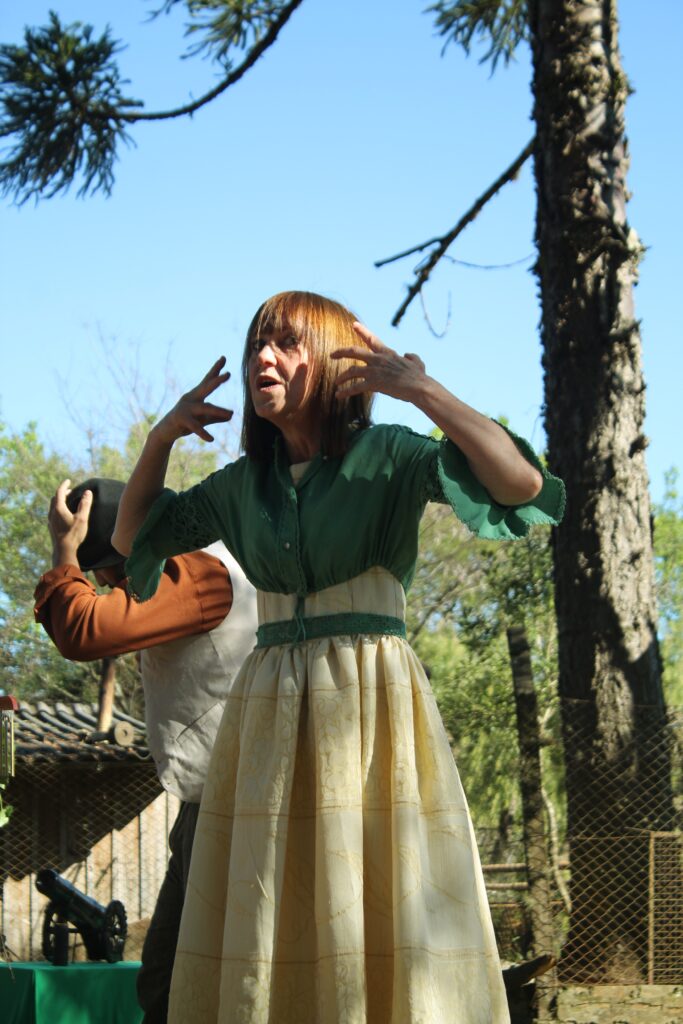
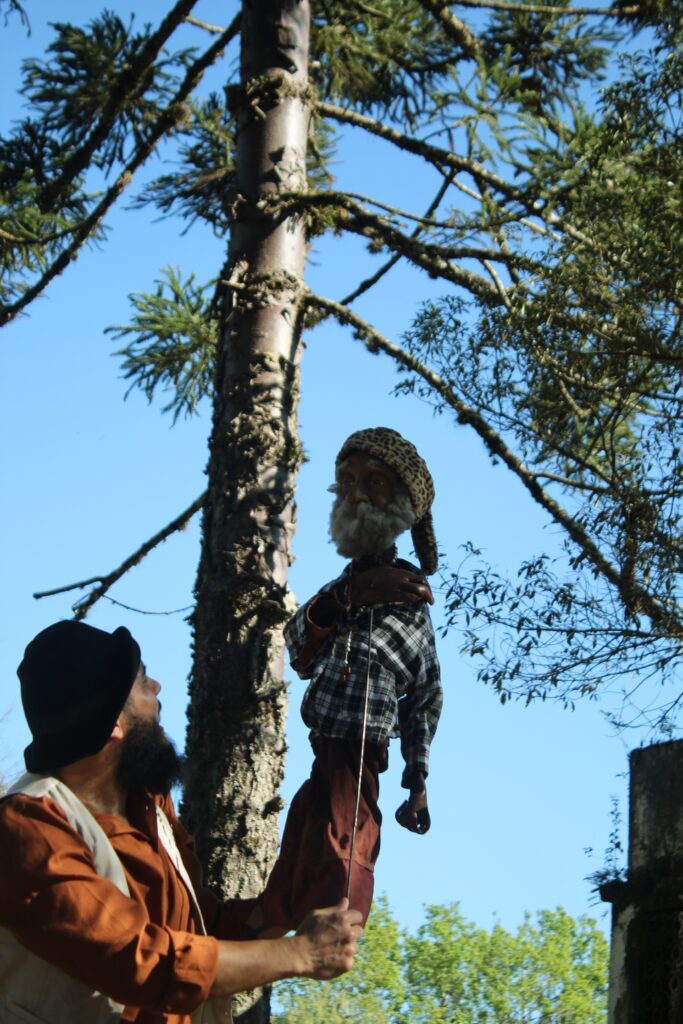
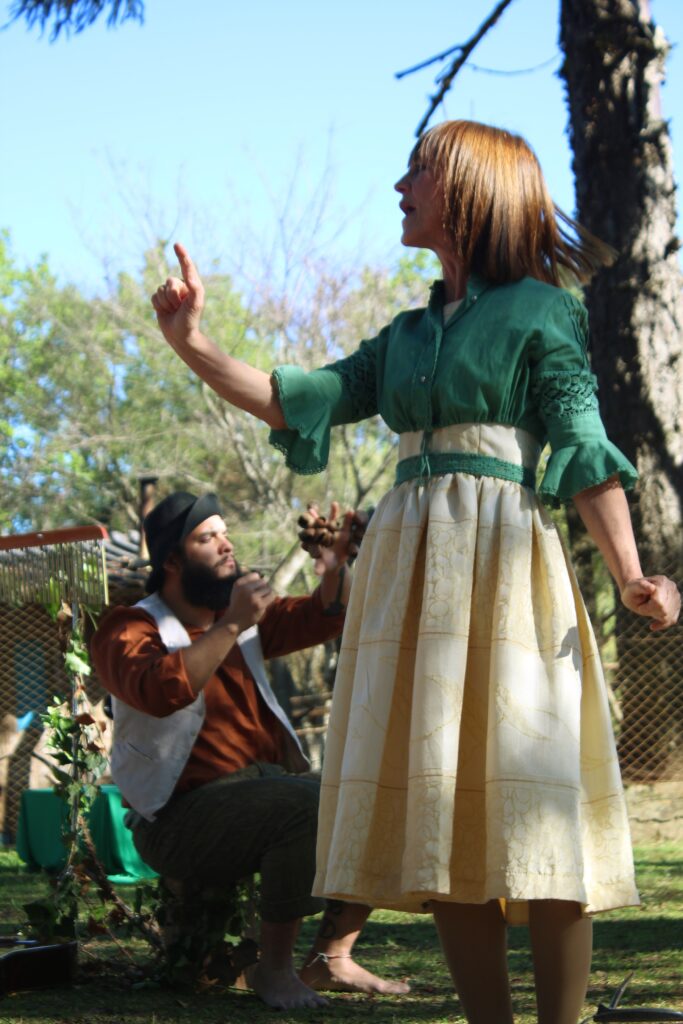
Research-performance Natureza Cabocla or Raízes e Asas
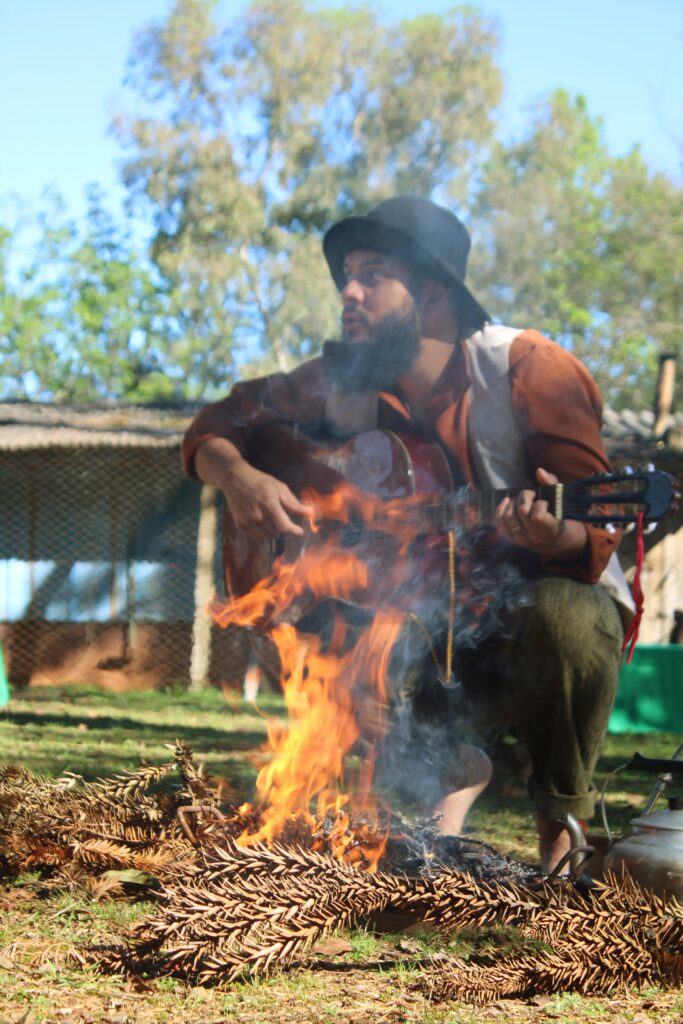
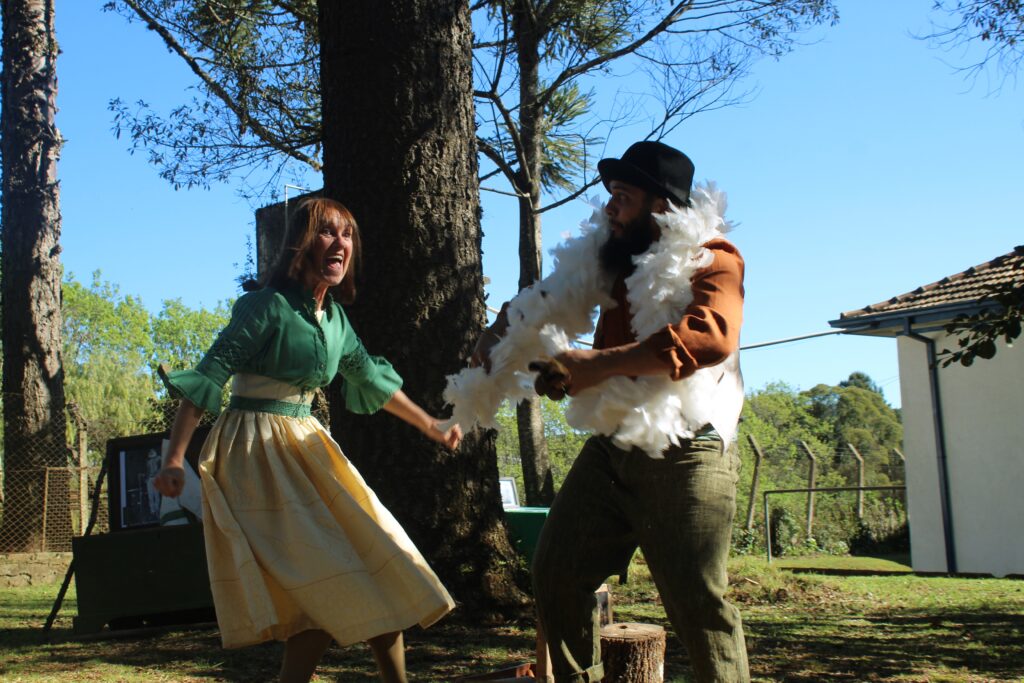
Synopsis: In the middle of the araucaria forest, two caboclos play at imitating bird sounds and dive deep into the stories that nature whispers through a bonfire. In this show, past and future meet in a present full of learning, telling myths, legends, stories and symbols that exist in the collective unconscious of the Santa Catarina backland roots, and thus discussing invisibility, racism, prejudice, social inequality, and, through the exchange of oral tradition, giving wings to the expressions of the “Contestado” popular cultures.
An important differential of the project is its research through the orality of the Contestado stories. The material gathered in historical, social, religious, mythological, sound and visual research around caboclo culture culminated in original text and music that seek to dialogue with the audience in an encounter where past and future meet in a present full of learning, telling myths and symbols that exist in the collective unconscious of our backland roots, and thus discussing invisibility, racism, prejudice, social inequality, and, through the exchange of this oral tradition, giving prominence to the expressions of the “Contestado” popular cultures.
An excerpt of the show can be watched online on the YouTube channel of IFSC of Caçador. In it, Lu Paes and Jorge Gonçalves, around a bonfire, invite us to sit close to the fire to tell the story of our people, our place. The video also brings photographs from the time of the Contestado conflict to recall some of the faces that were part of the history. (video above).
For those who cannot be present at the sessions, the show can be seen in video broadcast on August 11, 2021, on the Cidadania Cabocla programme.
Credits
Direction: Gustavo Zardo
Dramaturgy: Lu Paes
Cast: Lu Paes and Jorge Gonçalves
Set: Lumiar Produções Artísticas and Museu do Contestado
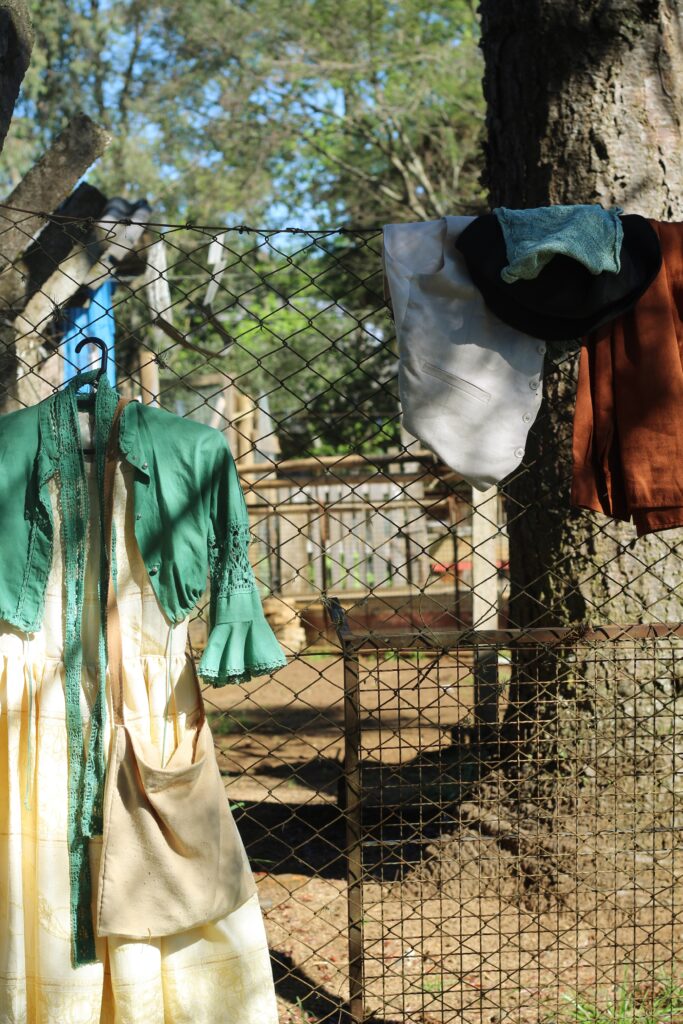
Costumes: Analia Bortolini
Music: Jorge Gonçalves (guitar and lyrics) and Romário José Borelli (lyrics)
Art: Deiviane Velho
Production: Gustavo Zardo
Duration 30 minutes.
Photo Gallery
Photos: Camila Dutra
Full Programme
List of venues and times of the performances of the theatrical show Natureza Cabocla
Tangará:
Date: April 26 (opening);
Venue: Rio Bonitense;
Time: 8:00 a.m.;
Contact: Roberto Bohnenberger.
Luzerna:
Date: April 26 (opening)
Venue: Auditorium of E.E.B. Padre Nóbrega;
Time: 2:30 p.m.;
Contact: Teacher Darlyn.
Videira:
Date: April 27;
Venue: E.E.B. Esther Crema Marmentini;
Time: 8:30 a.m.;
Contact: Teacher Dandy Santos.
Date: April 27;
Venue: IFC Videira Auditorium;
Time: 2:00 p.m.;
Contact: Teacher Davi.
Fraiburgo:
Date: April 28;
Venue: IFC Fraiburgo Auditorium;
Time: 8:30 a.m.;
Contact: Teacher Luiz and Teacher Rodrigo.
Date: April 28;
Venue: Recanto Caboclo (Taquarussu do Bonsucesso);
Time: 7:30 p.m.;
Contact: Teacher Alzira Prates.
Monte Castelo:
Date: April 29;
Venue: Ivo Moreira Events Center;
Time: 7:40 p.m. (after mass);
Contact: Teacher Erick.
São Bento do Sul:
Date: April 30 (Closing);
Venue: Alto da Glória Community;
Time: 3:00 p.m.;
Contact: Jaciara Machuga.